
interior-design-services
From Empty Rooms to Warm Memories: The Magic of Interior Design Services
Turn empty rooms into warm, functional homes. Interior design services in Islamabad & Rawalpindi—planning, materials, lighting, and turnkey execution.
Empty rooms don’t tell you much. They echo, they glare under tube lights, and they make you wonder where the sofa should go. The real work begins when you try to shape those rooms around the people who’ll live there. Good interior design services do exactly that—take a plain space and help it hold family routines, quiet moments, and the odd tea party that somehow keeps growing.
Interior design isn’t a shopping list. It’s a sequence of small, sensible decisions that add up to a home that works.
Start with your day. Where do shoes pile up? Who studies at night? Does the lounge double as a play area? Answers to these questions guide everything else—so a console appears near the door with baskets for shoes, a desk lamp with a warm switch shows up in the study, and a soft rug defines the play zone. When design follows your routine, rooms feel easy instead of staged.
A room should look good, yes, but it should also be easy to clean, simple to navigate, and kind to the eyes. That balance comes from layout (leave walking paths), furniture scale (no oversized sofas that block doors), and lighting that isn’t only overhead. Add a floor lamp near the reading chair, a dimmer in the dining area, and task lights where you actually work. The feeling of comfort grows from these quiet choices.
Homes here hold more than furniture. They hold cousins dropping by without notice, festival dinners, prayer time, and the daily hustle of school runs.
Flexible spaces help. A dining table with a hidden leaf can stretch for Eid dinner. A corner with a prayer mat needs clean sightlines and gentle light. Guest bedding needs a home—perhaps a bench with storage at the foot of the bed. Little systems like these take the stress out of busy days.
Islamabad and Rawalpindi see hot summers, a dusty season, and the occasional downpour. That means washable slipcovers, cross-ventilation, and easy-to-mop floors earn their keep. Sheer curtains with a blackout layer help you manage heat and privacy. Local stone on counters deals better with heat than many imported options. If a material can handle dust, sun, and frequent use, it deserves a spot in your design short list.
Design should meet you where you are—home, office, or shop—and then make it better.
Apartments in the city center, houses in Bahria Town, older homes in settled sectors—all need different solutions. We measure carefully, listen to your list, and propose layouts and finishes that respect your budget and taste. If you prefer a gradual makeover, we plan it in phases so you never feel overwhelmed.
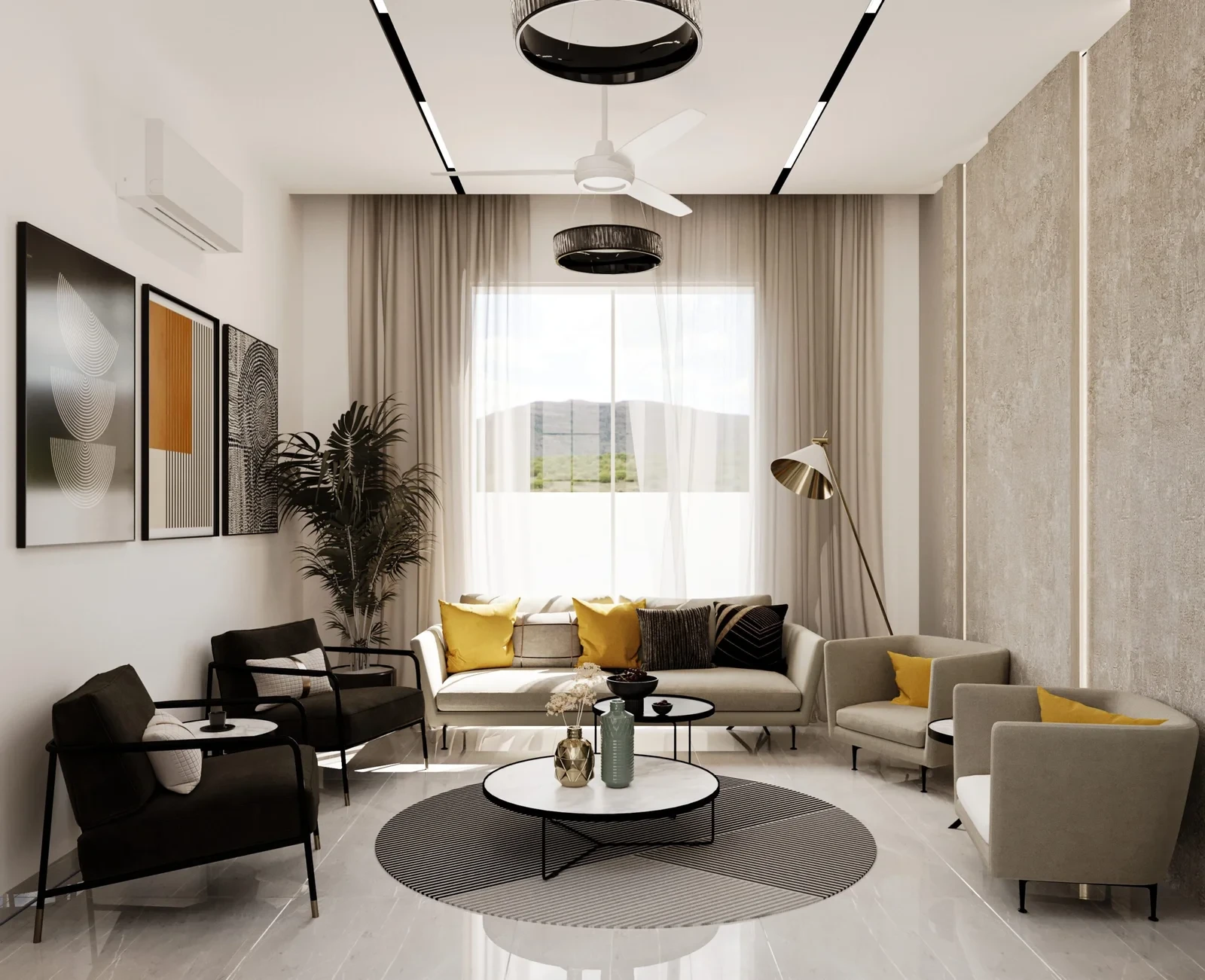
The lounge earns its title as the busiest room. We focus on durable fabrics (think tight weaves that don’t snag), seating depth you can actually relax on, and layered lighting. A single overhead light makes the room feel flat; add wall sconces and a floor lamp, and you’ll notice the difference right away. A simple focal wall—paint, paneling, or art—pulls the room together without shouting.
Bedrooms should quiet the day down. We aim for soft color stories, blackout curtains that actually close, and wardrobes with enough hanging and drawer space to stop the morning scramble. A niche for prayer, dimmable bedside lights, and a padded headboard make nights calmer and mornings a little kinder.
The best kitchens respect the work triangle—stove, sink, fridge within easy reach—and then pay attention to storage. Deep drawers beat low cabinets most days. Choose counters that don’t stain easily and cabinet handles that don’t catch sleeves. In the dining area, stable chairs with soft edges invite long meals. Warm light above the table keeps the conversation going after the plates are cleared.
An office should help people focus and make visitors feel welcome. We plan circulation paths so you don’t bump into chairs, use acoustics to tame echo in meeting rooms, and design storage for files that still need paper. The reception area gets the brand story without becoming fussy—one well-made sign, a calm color, and proper lighting do more than a wall of graphics.
Shops depend on flow. We place display racks to create natural routes, light key products so they stand out, and give the cashier a clear view without blocking the entrance. Cafés need chairs that feel good for 30 minutes, not three, and durable flooring that can take rain, spilled milk, and the daily mop.
Clear steps keep designs on track and budgets steady.
We talk about how you live or work, your timeline, and the number you want to stay under. Then we measure, photograph, and map sunlight and ventilation. Small details—like where a door hits the wall—save big headaches later.
You’ll see mood boards and two or three layouts. It’s much easier to react to visuals than to imagine them from words. We expect edits at this stage; that’s the point.
We shortlist options you can touch—tiles, fabrics, paints, handles. A lighting plan layers ambient, task, and accent lights. No more chopping onions in your own shadow.
Once the direction feels right, we share 3D views so you can check heights, proportions, and spacing. After revisions, we lock the design and agree on the schedule.
Vendors get a clear sequence: electrical and plumbing first, then false ceilings, flooring, paint, and curtains. We review milestones—woodwork alignment, joint gaps, switch heights—so mistakes don’t become permanent.
Rugs, cushions, art, and small greens bring the rooms to life. After handover, we remain reachable for touch-ups and seasonal maintenance advice. Homes change; your design partner should be easy to call.
Stories show how design actually feels in daily life.
The room was long, bright, and awkward. We anchored the seating with a soft rug, placed a sectional to face natural light, and added a narrow console behind the sofa for charging phones out of sight. Two floor lamps softened the corners. Now the family uses the lounge every evening, not just when guests arrive.
The couple kept tripping over laundry baskets and stacks of books. We planned a full-height wardrobe with proper hanging space, a shelf for prayer items, and shallow drawers for daily clothes. Bedside lights with warm switches and a textured bed throw slowed the room down. They sleep better. That’s the best review we could ask for.
Staff had headaches from glare and echo. We rotated desks toward softer daylight, added acoustic panels behind the logo wall, and introduced hardy indoor greens. Visitors comment on the calm, and calls sound clearer. No fancy tricks—just the right fixes.
Apartments demand creativity and reward it.
Wall-hung consoles keep floors free, which makes rooms feel bigger immediately. A mirror opposite a window brightens a corridor. Sliding doors save precious swing space. Built-in benches around a compact table create a dining nook that hides extra bedding and winter wear.
Not every improvement needs a contractor. A weekend paint refresh, new cabinet handles, a statement pendant above the dining table, or a textured rug under the sofa can reset a room for far less than a full renovation. When the budget is tight, start with lighting and soft furnishings—you’ll see the difference fastest.
Choose finishes that can stand up to the weather and the week.
In kitchens and baths, water-resistant boards and non-porous tiles keep maintenance simple. On balconies and terraces, weather-friendly finishes save you from fading and peeling. For dust, closed storage and washable fabrics help. Matte paint hides fingerprints better than high gloss; wipe-clean laminates around heavy-use zones reduce scrubbing.
Sheesham for furniture, seasoned diyar for doors, and local stone for counters give character and strength. Handwoven runners, cane accents, and brass hardware add warmth without feeling heavy. Buying local often means faster replacement if anything chips or breaks, and it keeps skilled craft alive.
Money talk should be straight and simple.
Scope (one room vs. whole home), area, custom carpentry, brand of fixtures, and site constraints all play a role. Timelines matter too—urgent projects need more hands and longer shifts. Reusing good pieces—sofas with new fabric, a sturdy dining table with refinished top—can save a lot.
We split the estimates into design fee, materials, labor, delivery, and a small contingency. When each part is clear, it’s easier to adjust without losing the look. Prefer a lower cost? Swap a few finishes, keep the layout, and you’ll still get the feeling you wanted.
Pick a range you’re comfortable with. Prioritize storage, lighting, and key furniture first. Leave a buffer for hidden issues—an uneven floor, a wall that needs repair. If the budget must stretch, do the home in phases: start with the kitchen and bedroom, then move to the lounge and study.
Preparation saves time and arguments.
Collect a small folder of rooms you like. Note what draws you—colors, textures, open shelves, or closed cabinets. Make a needs list (study desk, puja/prayer corner, extra pantry space). Point out must-keep items: a grandmother’s console, a gifted painting, and the prayer rug. Good design makes room for these anchors.
Line up who has final say, agree on a response time for approvals, and plan site access for vendors. Late decisions ripple through schedules and deliveries. Quick, clear feedback keeps the project moving and the budget in check.
A single room may take three to six weeks, depending on custom work and deliveries. Full homes vary between eight and sixteen weeks. Early selections and quick approvals shorten timelines.
Both. Some clients want drawings, lists, and guidance for their own teams; others prefer a single point of responsibility. We discuss which route makes sense for your time and budget.
Of course. If a piece is sturdy or sentimental, we build around it. A sofa can be reupholstered, a dining table refinished, a cabinet paired with fresher hardware.
Yes. We coordinate electricians, carpenters, painters, and curtain makers so everything follows one plan. This usually prevents the classic headache of “nice sofa, wrong switch point.”
Product warranties come from the brand or maker. We share all documents at handover and explain care tips so it finishes well. If something needs attention later, we’re easy to reach.